
- Home
- »
- Stored Product Pests
Stored Product Pests
“Men are so self-complacent in their own affairs, and so willing to deceive himself, that they are rescued with difficulty from this pest. If they wish to defend themselves, they run the risk of becoming contemptible.”
NICCOLO MACHIAVELLI
About Stored Product Pests

BIOLOGY
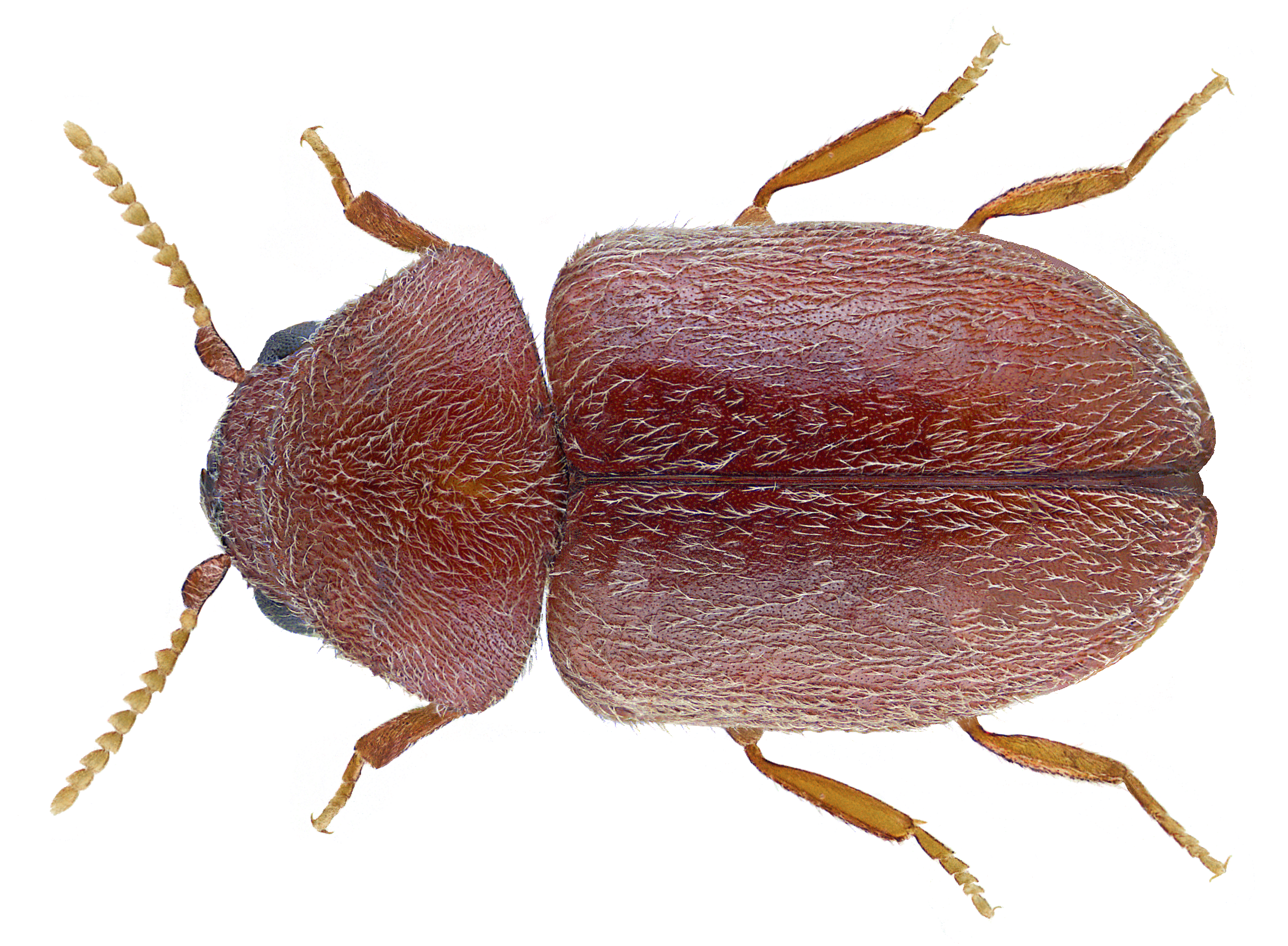
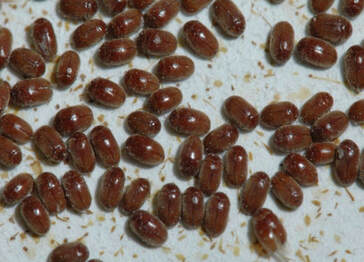
brownish-red in colour
2mm to 3mm in length
BIOLOGY
life cycle: 1-3 months
eggs to larvae: a few days
larvae to pupae: 1-3 months
pupae to adult: several weeks
BEHAVIOUR
The Red Flour Beetle is active at night and attracted to light

BREEDING
The female Cigarette Beetle lays eggs on or near the food source, usually cracks or crevices of stored materials.

FEEDING
The Cigarette Beetle feed on the food source, usually tunnelling into it and creating small holes or tunnels.
FEEDING
They feed on the food sources they emerge from or can fly to other nearby sources.
IDENTIFY
The Cigarette Beetle larvae are small, white and grub-like with a brown head.
ENVIRONMENT
They are attracted to warm and humid environments, and enter buildings through small cracks and gaps, and can be transported in infested materials.

INSPECTION
Our Technicians are trained to meticulously seek out stored product pests. They also take into consideration structural issues, housekeeping practices as well as surrounding environments.

PHEROMONE TRAPS
These traps contain synthetic versions of pheromones that pests release to attract mates. When the male pest enters the trap and gets stuck, they are prevented from mating which reduces the population over time.

ULTRA-LOW VOLUME (ULV) MISTING
For serious infestations, this method releases the formula in a fine mist that penetrates all cracks and crevices, effectively targeting all the stored product pests.

PROFESSIONAL ADVICE
Based on our inspection of your premises and the contribution factors that may be involved, our technician will offer advice on how to keep stored product pests away.

SERVICE REPORT
After the service is done, a digital report will be emailed to you. This report contains photos of the problematic spots and the treatment done, along with suggestions specific to your site.
BIOLOGY
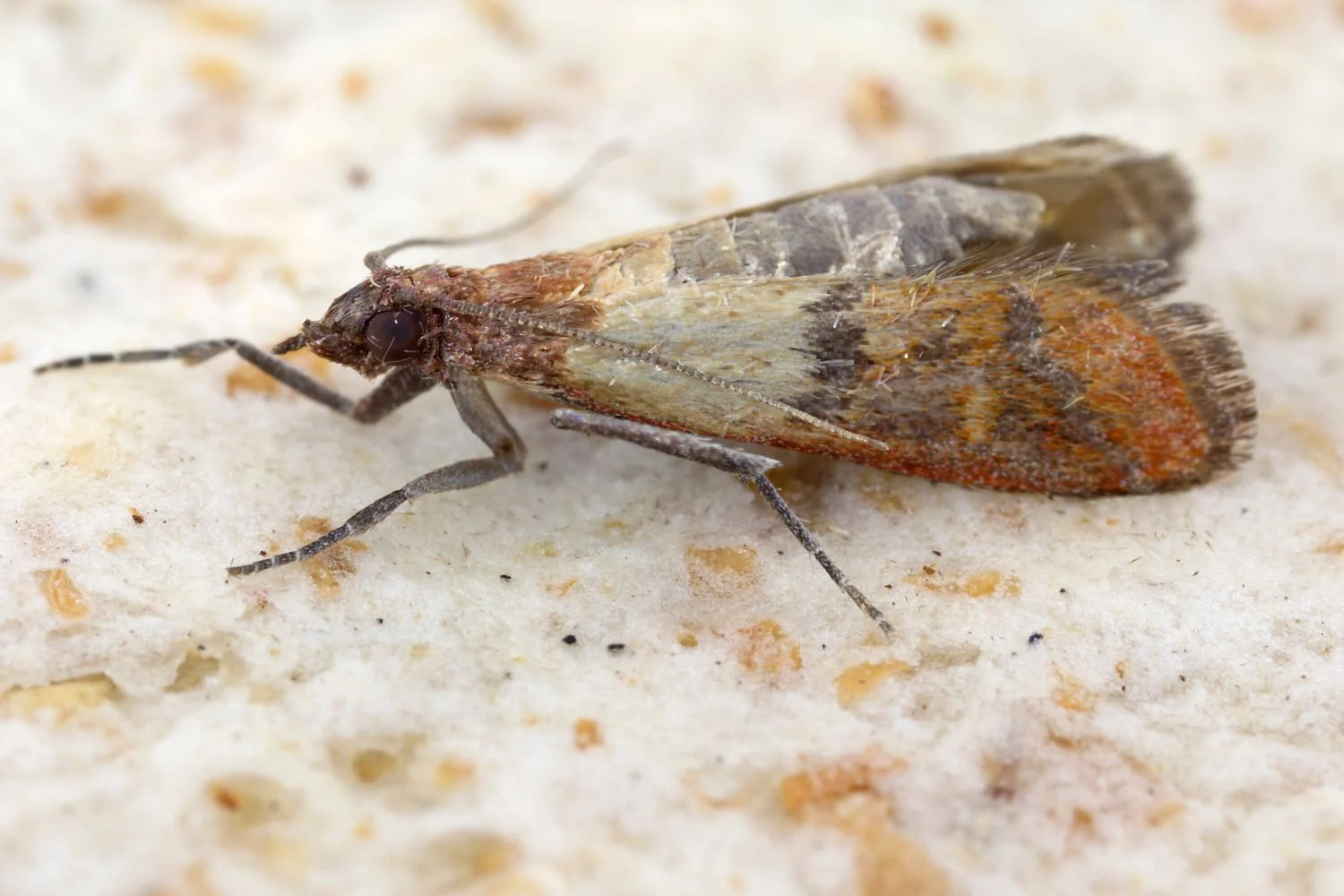
pale, yellowish-brown in colour
8mm to 10mm in length
BIOLOGY
life cycle: 6-8 weeks
eggs to larvae: a few days
larvae to pupae: 2-6 weeks
pupae to adult: 1-2 weeks
BEHAVIOUR
The Indianmeal Moth is attracted to warm and humid environments like homes, warehouses and other storage areas where products are stored.
BREEDING
The female Indianmeal Moth lays 60-300 eggs depending on food source and environmental conditions.
FEEDING
Larvae are small, cream-coloured and grub-like with a brown head. They feed on the food source, usually tunnelling into it and creating small holes or tunnels.
FEEDING
The adult moths do not feed on stored product - they only live for a short period of time to mate and lay eggs.

IDENTIFY
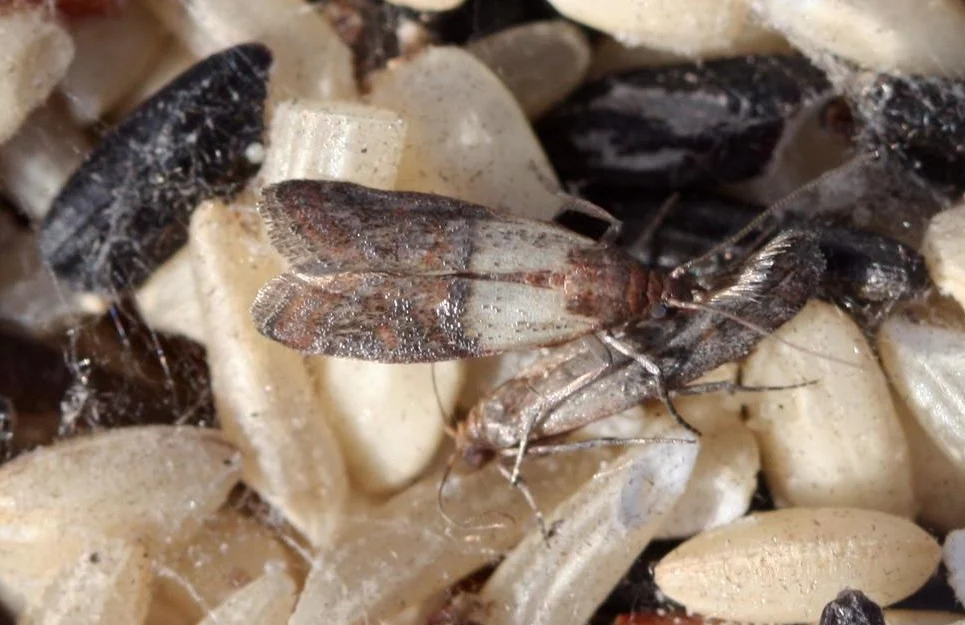
The Indianmeal Moth has distinctive wings with a reddish-brown band near the tip, and a pale grey band closer to the body.
HABITAT
They are attracted to warm and humid environments, and enter buildings through small cracks and gaps, and can be transported in infested materials.

INSPECTION
Our Technicians are trained to meticulously seek out stored product pests. They also take into consideration structural issues, housekeeping practices as well as surrounding environments.

PHEROMONE TRAPS
These traps contain synthetic versions of pheromones that pests release to attract mates. When the male pest enters the trap and gets stuck, they are prevented from mating which reduces the population over time.

ULTRA-LOW VOLUME (ULV) MISTING
For serious infestations, this method releases the formula in a fine mist that penetrates all cracks and crevices, effectively targeting all the stored product pests.

PROFESSIONAL ADVICE
Based on our inspection of your premises and the contribution factors that may be involved, our technician will offer advice on how to keep stored product pests away.

SERVICE REPORT
After the service is done, a digital report will be emailed to you. This report contains photos of the problematic spots and the treatment done, along with suggestions specific to your site.
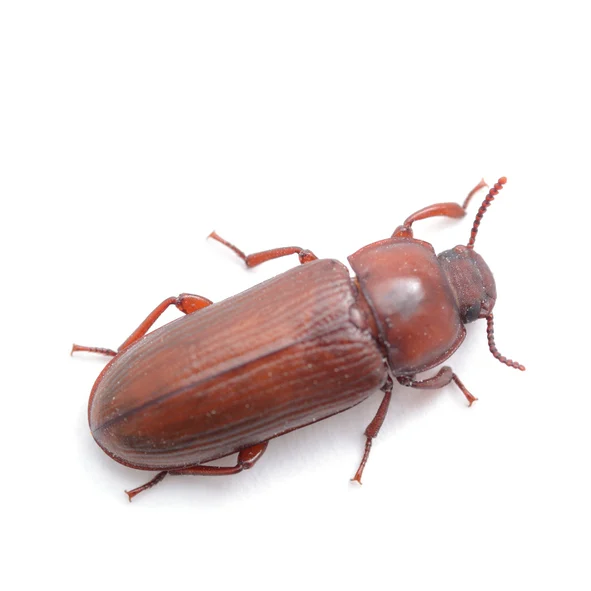
BIOLOGY
Reddish-brown in colour
3mm to 4mm in length
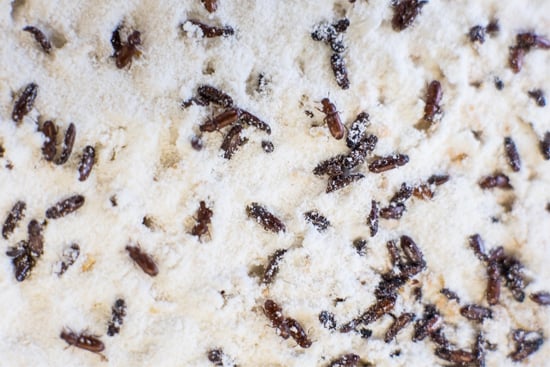
BIOLOGY
Life cycle: 4-5 weeks
Eggs to larvae: 2-6 weeks
Larvae to pupae: 6-7 weeks
Pupae to adult: 5-7 days
BEHAVIOUR
The Red Flour Beetle is active at night and attracted to light

BREEDING
The Red Flour Beetle lays up to 300 eggs in her lifetime.
FEEDING
Larvae feed on grain-based products like flour and cereals by tunneling through and leaving a powdery residue called “flour dust” that contaminate and spoil the stored food products.
FEEDING
The adult does not feed on stored food products but cause damage by contaminating the products with their faeces, cast skins and dead bodies.

IDENTIFY
The Red Flour Beetle can fly but it’s not a strong flier and tends to stay close to the food source.
CONDUCIVE
Optimal conditions for developing are high humidity and a temperature range of around 20-35°C.

INSPECTION
Our Technicians are trained to meticulously seek out stored product pests. They also take into consideration structural issues, housekeeping practices as well as surrounding environments.

PHEROMONE TRAPS
These traps contain synthetic versions of pheromones that pests release to attract mates. When the male pest enters the trap and gets stuck, they are prevented from mating which reduces the population over time.

ULTRA-LOW VOLUME (ULV) MISTING
For serious infestations, this method releases the formula in a fine mist that penetrates all cracks and crevices, effectively targeting all the stored product pests.

PROFESSIONAL ADVICE
Based on our inspection of your premises and the contribution factors that may be involved, our technician will offer advice on how to keep stored product pests away.

SERVICE REPORT
After the service is done, a digital report will be emailed to you. This report contains photos of the problematic spots and the treatment done, along with suggestions specific to your site.
Frequently Asked Questions
Singapore homes often face infestations from various ant species, including the common red ants, black ants, and pharaoh ants. ORIGIN’s ant exterminator services in Singapore can help identify and eliminate these pests.
Ants are incredibly persistent. Even a few crumbs or moisture can attract them, and once they find a food source, they leave a scent trail for others to follow. In Singapore’s humid climate, ants thrive year-round. If you’re dealing with repeated sightings, it could mean there's a nest hidden nearby. That’s when professional help from an ant exterminator in Singapore becomes necessary.
Some signs include:
- Seeing long trails of ants, especially near food or water sources
- Spotting ants coming out of cracks, walls, or electrical sockets
- Piles of dirt (especially from carpenter ants)
- Ants in multiple rooms or levels of your home
If you’re experiencing any of these, it’s best to consult a certified ant exterminator in Singapore like ORIGIN Exterminators before the ant infestation spreads.
Yes, absolutely. At ORIGIN, we use environmentally responsible and targeted solutions that are safe for children and pets. Our experts are trained to treat the problem while ensuring minimal disruption to your home life. Safety and sustainability are core to how we handle ants infestation treatments.
It depends on the size and type of infestation. Some minor cases can be resolved in a single treatment, while more complex infestations (like those with multiple nests) may require follow-up visits. During our inspection, our team will provide a clear timeline based on your situation.
Before our visit:
- Try not to disturb the ants so we can track their movements
- Clear access to affected areas
After treatment:
- Follow our team’s simple aftercare tips
- Avoid using other sprays or cleaners in treated zones unless advised
We’ll guide you through everything to make the process stress-free and effective.
Costs vary depending on the severity of the infestation and the size of your property. At ORIGIN, we offer transparent pricing after an initial inspection. We aim to provide long-term value by not just removing ants but also preventing their return.